

How Modern Movies Have Romanticized Toxic Traits
- bws.uprm
- Sep 25, 2025
- 3 min read
Written by: Liany Mercado Matute
Throughout the years, we, as a society, have started to blur the lines between toxic behaviors and heroic, romantic behaviors. Has suddenly the idea of romance shifted in the eyes of our young society? From big motion pictures like Titanic, Pride and Prejudice, The Notebook, La La Land to more popular modern movies such as Twilight, Fifty Shades of Grey, and atrocities like After.

But what has changed? Why are we getting more movies with less romantic love interest, and why are the actions of these so-called ‘love interest’ have become more and more questionable?
Love is described as a multifaceted emotion that can be characterized by strong feelings of affection, attachment or desire for another person. Love is fueled by these strong emotions, but two emotions here stand out more than the rest. These two have been twisted to their extreme and used to benefit from more underlining issues: Attachment and Desire.
Desire can be a tricky thing to handle when not done correctly could lead to obsession. Some examples of such cases, where these obsessive patterns are romanticized and glorified, can be found in movies like Twilight, tv series You, 365 Days, and The Ballad of Songbird and Snakes. Both the love interests of the movies Twilight and The Ballad of Songbird and Snakes, these being Edward Cullen and Coriolanus Snow, demonstrate throughout the relationship obsessive patterns that are somehow seen appealing to the eyes of the audience. We can see this when Edward Cullen, the male love interest of the movie Twilight, sneaked into Bella’s room and observed her while she slept.
Creepy?
YES. Why would this be considered romantic?
Some would argue that Edward’s actions or those of the character Coriolanus Snow were acts of love—of affection, but what I see is an obsession that was disguised by pretty words and promises. Was Coriolanus Snow really in love with Lucy Gray or was she just an extension of what he saw himself as? Could Lucy have been the last sign of what was good in Snow? And if that was the case, can their relationship really be driven by love?
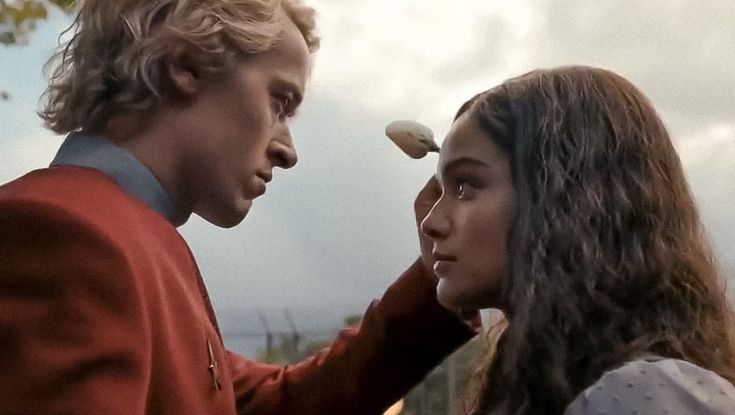
Further on, these characters, that were clearly toxic and unstable, fixate this distorted emotional attachment towards the female protagonist. In movies like 365 Days, the male love interest (how can he even be seen as the love interest is beyond me) kidnaps the main character, and holds her captive until she eventually falls for him. All this simply because he saw her ONCE in his life and knew she was the one, a feeling that was purely desire. The terms kidnapped and held captive would traditionally set off some alarms, but now they’re casted aside as quirky, sexy actions that come out of love. Sure, these are all patterns and traits we find in characters from books or movies, but when did we start to normalize such toxic and highly alarming factors in romantic partners? And where do we draw the line in real life?
Is having a partner utterly obsessed with us something romantic? Are their actions of monitoring everything we do and controlling our interactions with other people really signs of affection or love? Confusing toxic-masculinity with the general idea of what masculinity is, is a concept that has widely been misused. And the movie industry has taken advantage of it.
It’s important that we learn where to draw the line between what is characterized as a healthy relationship and move away from what has been normalized. Manipulative actions, words, psychological, and emotional abuse like the ones seen in After, the book adaptation, and in the tv series You, aren’t a reflection on how a partner or love interest should be demonstrating love. Toxic patterns found in relationships can be due to the appealing attraction of drama and tension, but why are we so compelled to believe that something that is dramatic is something that is worth it? Why are we so bend on the belief that at the end of the day, all the tears and painful moments will atone for something in the future.

These toxic relationships need to stop being glorified and defended. Sexual desire and manipulative actions shouldn’t be going hand-to-hand like it has been shown in such movies. And let’s start noticing those red flags that we’ve become accustomed to seeing in relationships. We need to set a line between what are the fantasies that we crave and what are the realities that we want to live, and not allow ourselves to be influenced by what are romantic movies nowadays.


Comments